

The Core Dilemma: Spreadsheets vs. Dedicated Software for Variety Testing
Plant breeding is a data-intensive process where the quality of information directly impacts the success of developing new plant varieties. A critical phase, variety testing, generates vast amounts of data from trials conducted across multiple locations and years. Historically, many breeding programs have relied on general-purpose spreadsheets to manage this complex information. While accessible, this approach introduces significant risks. Data entry becomes prone to error, with inconsistent trait naming conventions creating ambiguity and complicating analyses. Version control is often disorganized, making it difficult to identify the authoritative dataset. Furthermore, spreadsheets lack a formal audit trail, rendering it nearly impossible to track who made a change and why. This fragmented system hinders the reliable comparison of performance across different environments and seasons.
Dedicated variety testing software is engineered specifically to resolve these issues. It provides a structured, centralized environment for managing the entire trial workflow, from initial design and data collection through to analysis and final reporting. By enforcing standards and maintaining data integrity, such systems enable more confident and efficient decision-making.
What Happens When Data Traceability Fails in a Breeding Program?
Consider a scenario where a promising plant line is identified after analyzing data from a multi-location trial. During the subsequent seed multiplication phase, a question arises regarding the purity of the source material used in one of the trials. Without a robust traceability system, linking the analyzed performance data back to the specific plot in the field, and from there to the original seed lot, becomes a painstaking manual investigation. This process can introduce significant delays and cast doubt on the validity of the selection decision. Such operational bottlenecks can slow down the entire breeding cycle.
Effective variety testing software prevents this by implementing a comprehensive identity system. It assigns stable, unique identifiers to every critical element in the process, including the genetic entries, individual plots, seed bags, and any collected tissue samples. This creates an unbroken chain of custody, ensuring that any data point can be quickly and accurately traced back to its physical origin. A built-in audit trail further enhances this by recording all modifications to the data, providing a transparent history of who made changes, when, and for what reason.
Designing Reproducible Trials: Beyond Simple Randomization
The scientific validity of a variety trial begins with its experimental design. Professional software must therefore support a range of established statistical designs that are appropriate for agricultural research. These include Randomized Complete Block Designs (RCBD), incomplete block designs, and row-column designs, all of which are methods to manage and account for natural variability within a field. A cornerstone feature is reproducibility. The software should allow a user to save the specific parameters of a design and use a randomization 'seed', which enables the exact same field layout to be regenerated later if required for validation or review. Equally important is the ability to account for practical field constraints. A robust system will accommodate factors like the width of alleys, the placement of border rows, the serpentine paths of planting machinery, and precise plot dimensions, ensuring the digital map accurately reflects the physical reality of the trial.
How Do Modern Systems Standardize Field Data Collection?
Data collection in the field often takes place under challenging conditions, with intermittent or no network connectivity. Modern systems address this with mobile applications built for offline-first operation. This architecture allows data to be captured and validated directly on a handheld device, which is then synchronized to the central database when a connection becomes available. To minimize transcription errors, a common problem with manual pen-and-paper methods, these applications typically integrate barcode and QR code scanning. A technician can simply scan a plot stake or sample bag to ensure that observations are recorded against the correct identifier without mistakes.
A core feature enabling reliable multi-trial analysis is a centralized trait dictionary. This system enforces a single, standardized definition for every trait being measured, including its official name, measurement method, units, and scoring scale. This prevents the data fragmentation that occurs when different teams or individuals use different terminology for the same observation, such as "Plant Height" versus "Ht_cm," ensuring data from all sources is consistent and comparable.
Visit the business website through the attached link: phenome-networks.com.
Comparing Analysis Approaches: Basic Stats vs. Advanced Modeling
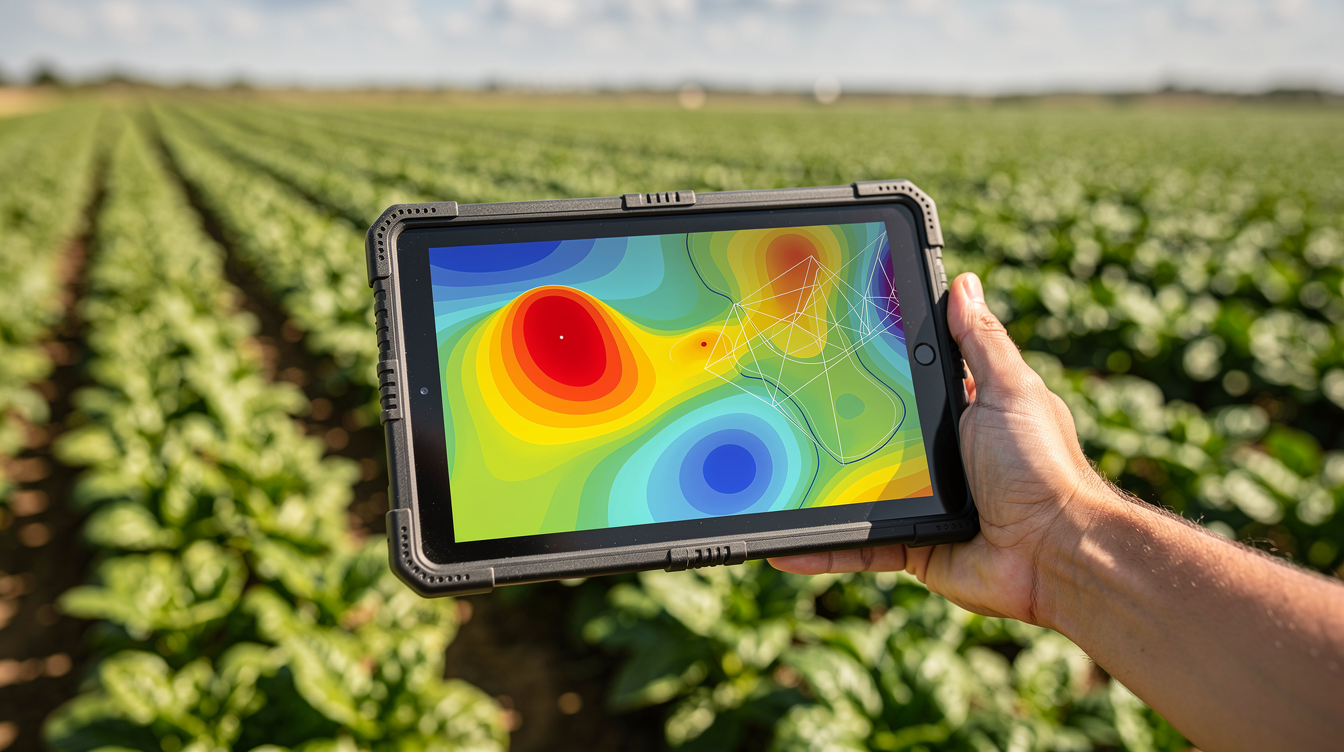
Once data is collected and quality-checked, it must be analyzed to guide selection decisions. While simple averages or basic analyses of variance can offer a preliminary look at performance within a single trial, they often fall short when dealing with complex datasets from multiple environments. Multi-environment trials (MET) are frequently unbalanced, meaning data may be missing from some plots due to factors like localized pest damage or poor germination. Advanced statistical methods, particularly mixed models, are required to properly handle this missing data and accurately separate the genetic potential of a variety from environmental influences. A critical aspect of MET analysis is understanding how different genotypes perform across different locations and years. This phenomenon is known as Genotype-by-Environment (GxE) interaction. Software should provide clear tools to visualize and interpret these Environment Interactions, helping breeders determine whether to select a variety that performs consistently everywhere or one that excels in a specific target region.
A Checklist for Evaluating Variety Testing Software Features
When selecting a software solution, a structured checklist helps evaluate key capabilities. The focus should be on features that directly address and prevent common failure modes in the plant breeding pipeline. For instance, robust trial design tools are a prerequisite for conducting valid multi-environment yield trials. Likewise, mobile data capture features should be assessed for their reliability in offline scenarios, a capability shown to be critical by resources such as the Field Book documentation. The following table outlines core feature categories and their relative importance for a professional breeding program.
| Feature Category | Core Functionality | Importance Level |
|---|---|---|
| Trial Design & Layout | Support for RCBD, Lattice, and Row-Column designs; field map generation | Essential |
| Data Collection | Offline mobile app with barcode/QR scanning support | Essential |
| Data Standardization | Centralized trait dictionary with defined scales and units | Essential |
| Data Quality & Audit | Configurable quality control (QC) rules; full audit trail of all data changes | Essential |
| Analytics | Mixed-model analysis for MET; GxE interaction visualization tools | Important |
| Reporting & Export | Customizable reports; ability to export to PDF and structured data formats | Important |
| Security & Access | Role-based user permissions and granular data access controls | Essential |
What is the primary difference between variety testing software and a general breeding database?
Variety testing software is specialized for managing the lifecycle of field trials, focusing on experiment design, field data capture, statistical analysis of performance, and reporting. A general breeding database, while related, typically has a broader focus on managing germplasm inventory, pedigrees, and long-term genetic information.
Why is offline capability important for field data collection apps?
Agricultural research fields are often in rural or remote areas with poor or nonexistent internet connectivity. An offline-first mobile app allows researchers to continue collecting data without interruption. The data is stored securely on the device and automatically synchronized with the main database once a network connection is re-established, preventing data loss and workflow delays.
What is Genotype-by-Environment (GxE) interaction in plant breeding?
Genotype-by-Environment (GxE) interaction occurs when different plant varieties (genotypes) respond differently to various environmental conditions. For example, a variety that yields the most in a dry climate may not be the top performer in a wet climate. Understanding GxE is fundamental for breeders to select varieties that are either broadly adapted to many environments or specifically adapted to a target region.
About the Business
Phenome Networks provides comprehensive management systems for plant and animal breeding programs. Their solutions are designed to support the diverse needs of clients across the agricultural sector, including commercial seed companies, plant breeders, and variety testers. The platforms are also utilized by agricultural researchers and universities to streamline research, manage complex data, and accelerate the development of new varieties and breeds.